The Power of the Wild: Using Jaguar Animal Illustration in Your Projects
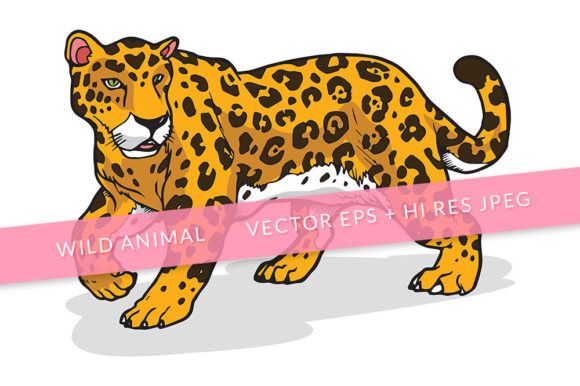
There’s something magnetic about a jaguar. It’s not just the striking rosettes or the powerful build—it’s the sheer presence. Capturing that in a static design asset is a challenge, but when you find a resource that nails it, like a high-quality Jaguar Animal Illustration, it changes the game for your creative work. This isn't just another clipart image. It's a piece of art that carries the energy of the animal, ready to be deployed across a dozen different projects.
I’ve worked with countless design assets over the years, and the ones that stick around—the ones you reach for again and again—are the ones with personality. A generic vector cat might be technically correct, but it lacks soul. A well-crafted Jaguar Animal Illustration, however, brings a specific mood. It can be fierce and dominant for a sports brand, elegant and mysterious for a luxury label, or educational and detailed for a nature publication. The versatility is baked right into the artwork’s quality.
Why This Illustration Isn't Just Another Graphic
Let's break down what makes a resource like this a cornerstone for your design toolkit. The package I’m referring to includes two critical formats: a high-resolution JPEG and a vector EPS file. That combination is more powerful than it sounds. The JPEG gives you an immediate, ready-to-use image with rich detail and color depth—perfect for dropping into a social media post, a blog header, or a presentation slide. The vector EPS file is the real workhorse. It’s infinitely scalable. You can blow it up to cover the side of a building or shrink it down for a favicon, and the lines will remain crisp. No pixelation, ever.
For the designer or entrepreneur, this means one asset serves multiple masters. The same Jaguar Animal Illustration can become the hero image on your website, a bold graphic on a t-shirt, and a refined element in a printed brochure. The visual consistency this provides is invaluable for building a recognizable brand identity. You’re not scrambling to find a new jaguar picture that "kinda matches" for each new project; you have a cohesive visual anchor.
Matching the Illustration to Your Project's Personality
Not every jaguar illustration will fit every project. You have to consider the style. Is the illustration highly realistic, with detailed fur texture and a naturalistic pose? That’s fantastic for educational materials, wildlife conservation campaigns, or brands that want to convey authenticity and a connection to nature. Is it more stylized, with bold, simplified shapes and perhaps a limited color palette? That could be perfect for a modern tech startup's mascot, a children's book, or a logo design that needs to be memorable and clean.
Think about the emotion you need to evoke. A jaguar in mid-stride suggests momentum, progress, and power—ideal for a fitness brand or a consultancy firm. A jaguar resting or looking directly at the viewer can feel more confident, stable, and authoritative. The illustration’s visual hierarchy matters too. A complex, detailed piece works as a standalone focal point. A simpler one can be integrated into patterns or used as a supporting element without overwhelming your typography and main message.
Practical Applications Across the Board
The real test of a design asset is its utility. Where does a Jaguar Animal Illustration truly shine? Let's get specific.
For Branding and Marketing: Imagine this illustration as the cornerstone of a brand for an outdoor apparel company, a high-performance car detailer, or an exclusive members' club. It instantly communicates strength and prestige. Use it in your packaging design to make products leap off the shelf. Integrate it into your social media graphics to stop the scroll with a powerful, non-generic image.
For Publishing and Education: Textbooks, wildlife magazines, and children's educational apps need accurate, engaging visuals. A high-quality illustration adds immense value, making learning more visual and memorable. It can serve as a chapter opener, an infographic element, or a cover star.
For Digital and Print Design: In web design, it could be a stunning hero image or an interactive element. In editorial design, it can break up long columns of text and add visual interest. For print, the vector file ensures your posters, business cards, and flyers look sharp at any resolution.
For Personal and Commercial Projects: Crafters, hobbyists, and small business owners can use it for everything from custom phone cases and wall art to stickers and greeting cards. The included commercial license often allows for these kinds of uses, turning a creative passion into a potential side hustle.
Making It Work: Pairing and Integration
Throwing a powerful illustration into a design isn't enough. It needs to be integrated thoughtfully. Consider your font pairing. A strong, geometric sans serif font can complement the jaguar's power with modern cleanliness. A classic serif font might lend a more traditional, authoritative feel. Avoid overly delicate script fonts that could clash unless the illustration itself is very whimsical.
Color is your next lever. If the illustration is in full color, pull a dominant hue from it to use in your text or backgrounds to create harmony. If you're working with a monochrome version, you have even more freedom to apply your brand's color palette directly. The key is to let the illustration inform your design system, not fight against it. Test it at small sizes to ensure key details aren't lost. Does the jaguar's expression read when it's an inch wide? If not, you might need to use it more prominently or find a version with bolder lines.
Ultimately, a resource like a premium Jaguar Animal Illustration is a creative font for the eyes—a display font made of shape and form instead of letters. It’s a piece of modern typography for the visual age. By choosing one that aligns with your project's core message and applying it with intention, you harness the animal's inherent symbolism. You move beyond decoration and into storytelling, creating designs that are not only seen but felt. That’s how you build recognition and connect with an audience on a deeper level.